Tuesday, 2 December 2014

A Master List of 1,100 Free Courses From Top Universities: 33,000 Hours of Audio/Video Lectures

free courses online 1000


While you were eating turkey, we were busy rummaging around the internet and adding new courses to our big list of Free Online Courses, which now features 1,100 courses from top universities. Let’s give you the quick overview: The list lets you download audio & video lectures from schools like Stanford, Yale, MIT, Oxford and Harvard. Generally, the courses can be accessed via YouTube, iTunes or university web sites, and you can listen to the lectures anytime, anywhere, on your computer or smart phone. We didn’t do a precise calculation, but there’s probably about 33,000 hours of free audio & video lectures here. Enough to keep you busy for a very long time.


Right now you’ll find 127 free philosophy courses, 82 free history courses, 116 free computer science courses, 64 free physics courses and 55 Free Literature Courses in the collection, and that’s just beginning to scratch the surface. You can peruse sections covering Astronomy, Biology, Business, Chemistry, Economics, Engineering, Math, Political Science, Psychology and Religion.


Here are some highlights from the complete list of Free Online Courses. We’ve thrown a few unconventional/vintage courses in the mix just to keep things interesting.


  • A Romp Through Ethics for Complete Beginners – Free iTunes Video – Free Online Video – Free Online Audio – Marianne Talbot, Oxford University

  • Against All Odds: Inside Statistics – Free Online Video – Pardis Sabeti, Harvard

  • Ancient Greek History – Free Online Video – Free iTunes Audio – Free iTunes Video – Course Materials – Donald Kagan, Yale

  • Creative Reading and Writing – William S. Burroughs – Free Online Audio – Naropa University

  • Critical Reasoning for Beginners – Free iTunes Video – Free iTunes Audio – Free Online Video & Audio – Marianne Talbot, Oxford

  • Developing iOS 7 Apps for iPhone and iPad – Free iTunes Video – Paul Hegarty, Stanford

  • Edible Education 101 (Spring 2014) – Free Online Video – Free iTunes Video – Michael Pollan, UC Berkeley

  • Financial Markets – Free Online Video – Free iTunes Audio – Free iTunes Video – Course Materials – Robert Shiller, Yale

  • Growing Up in the Universe – Free Online Video – Richard Dawkins, Oxford

  • The Habitable Planet: A Systems Approach to Environmental Science – Free Online Video – Harvard/Smithsonian

  • Harvard’s Introduction to Computer Science – Various Formats – David Malan, Harvard

  • Hemingway, Fitzgerald, Faulkner – Free Online Video – Free iTunes Audio – Course Materials – Wai Chee Dimock, Yale

  • Heidegger’s Being & Time – Free iTunes Audio – Hubert Dreyfus, UC Berkeley

  • Human Behavioral Biology – Free iTunes Video – Free Online Video – Robert Sapolsky, Stanford

  • Introduction to the Old Testament (Hebrew Bible) – Free Online Video – Christine Hayes, Yale.

  • Introduction to Visual Studies – Free iTunes iOS App – Anna Divinsky, Penn State

  • Invitation to World Literature – Free Online Video – David Damrosch, Harvard

  • Philosophy of Language – Free iTunes Audio – John Searle, UC Berkeley

  • Physics for Future Presidents – Free Online Video – Richard Muller, UC Berkeley

  • Quantum Electrodynamics – Free Online Video – Richard Feynman, Presented at University of Auckland

  • Science and Cooking: From Haute Cuisine to the Science of Soft Matter – Free Online Video – Free iTunes Video – Course Info – Team taught, Harvard

  • Shakespeare After All: The Later Plays – Free Course in Multiple Formats – Marjorie Garber, Harvard

  • Speak Italian with Your Mouth Full – Free Online Video & Course Info – Free Online Video – Free iTunes Video – MIT, Dr. Paola Rebusco

  • The American Novel Since 1945 – Free Online Video – Free iTunes Audio – Free iTunes Video – Download Course – Amy Hungerford, Yale

  • The Central Philosophy of Tibet - Free Online Audio – Robert Thurman, Columbia University

  • The Character of Physical Law (1964) – Free Online Video – Richard Feynman, Cornell

  • The Hobbit – Free iTunes Video – Free Online Audio – More – Corey Olsen, Washington College

  • The Tempest – Free Online Audio – Allen Gisnberg, Naropa

  • Walter Kaufmann Lectures on Nietzsche, Kierkegaard and Sartre - Free Online Audio

  • World War and Society in the 20th Century: World War II – Free Course in Multiple Formats – Charles S. Maier, Harvard

The complete list of courses can be accessed here: 1,000 Free Online Courses from Top Universities


Related Content:


550 Free Audio Books: Download Great Books for Free.


700 Free eBooks for iPad, Kindle & Other Devices.


700 Free Movies Online: Great Classics, Indies, Noir, Westerns, etc..


Learn 48 Languages Online for Free: Spanish, Chinese, English & More.


A Master List of 1,100 Free Courses From Top Universities: 33,000 Hours of Audio/Video Lectures is a post from: Open Culture. Follow us on Facebook, Twitter, and Google Plus, or get our Daily Email. And don’t miss our big collections of Free Online Courses, Free Online Movies, Free eBooks, Free Audio Books, Free Foreign Language Lessons, and MOOCs.


The post A Master List of 1,100 Free Courses From Top Universities: 33,000 Hours of Audio/Video Lectures appeared first on Open Culture.


Open Culture


A Master List of 1,100 Free Courses From Top Universities: 33,000 Hours of Audio/Video Lectures
The Art of Making Blade Runner: See the Sketchbook, Storyboards, On-Set Polaroids & More


There’s never been a bad time to revisit Blade Runner, but now, with all the news about the in-development Blade Runner 2 breaking even as you read this, it seems like an especially appropriate time to go deeper into Ridley Scott’s piece of groundbreaking, Philip K. Dick-adapting cyberpunk cinema. Whatever you think of the prospect of a sequel, if you call yourself a Blade Runner fan, you’ll never turn down a chance for another look behind the scenes of the original.


http://www.youtube.com/watch?v=UyWHJ5o60L0

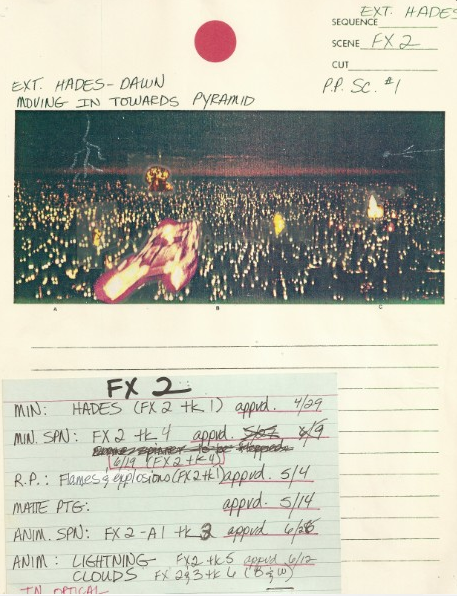
Hence our offering today of BBC critic Mark Kermode’s documentary above, On the Edge of Blade Runner, and, via Flavorwire, a selection of original storyboards from the film. Few science-fiction movies hold up so well aesthetically after 32 years, but only because few science-fction movies had so much sheer work put into their design — we are still, I imagine, assured a steady stream of production materials to gaze upon for a long time to come.


blade runner storyboard


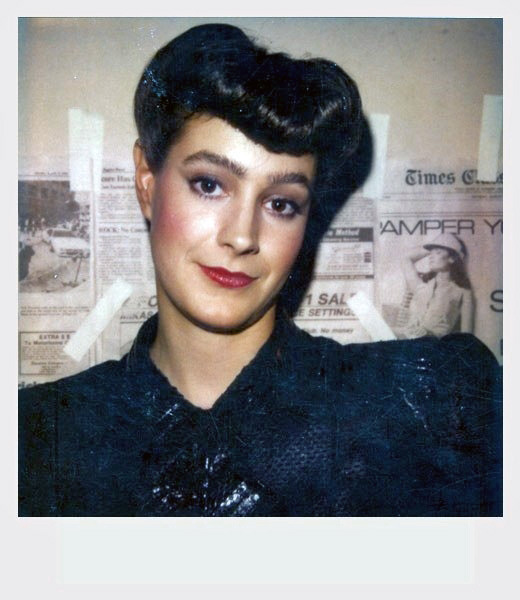
In recent years, for instance, Sean Young, who played the replicant Rachel, released her Polaroid photos from the film’s set. And if you missed it the first time around, you’ll want to circle back to our post featuring a freely readable online version of Blade Runner Sketchbook, a collection of over 100 production drawings and pieces of artwork that originally came out alongside the film. (See it above.)


blade runner polaroid


And whatever direction Blade Runner 2 takes, promising or less so, we’ll all hear a lot about it in the coming months. So to balance out the coming wave of promotion for the second one, why not watch a little of the promotion of the first one in the form of the convention reel below (produced not least to counter all the bad press the production had drawn at the time), which contains interviews with some of those responsible for Blade Runner‘s most enduring qualities: Ridley Scott, “visual futurist” Syd Mead, and visual effects designer Douglas Trumbull. If all three of those guys work on the sequel, well, maybe I’ll start getting excited.


http://www.youtube.com/watch?v=1ZVW8Zn5fSM

Related Content:


The Blade Runner Promotional Film


Blade Runner: The Pillar of Sci-Fi Cinema that Siskel, Ebert, and Studio Execs Originally Hated


The Blade Runner Sketchbook: The Original Art of Syd Mead and Ridley Scott Online


Philip K. Dick Previews Blade Runner: “The Impact of the Film is Going to be Overwhelming” (1981)


Colin Marshall hosts and produces Notebook on Cities and Culture and writes essays on cities, language, Asia, and men’s style. He’s at work on a book about Los Angeles, A Los Angeles Primer. Follow him on Twitter at @colinmarshall or on Facebook.


The Art of Making Blade Runner: See the Sketchbook, Storyboards, On-Set Polaroids & More is a post from: Open Culture. Follow us on Facebook, Twitter, and Google Plus, or get our Daily Email. And don’t miss our big collections of Free Online Courses, Free Online Movies, Free eBooks, Free Audio Books, Free Foreign Language Lessons, and MOOCs.


The post The Art of Making Blade Runner: See the Sketchbook, Storyboards, On-Set Polaroids & More appeared first on Open Culture.


Open Culture


The Art of Making Blade Runner: See the Sketchbook, Storyboards, On-Set Polaroids & More

Monday, 1 December 2014

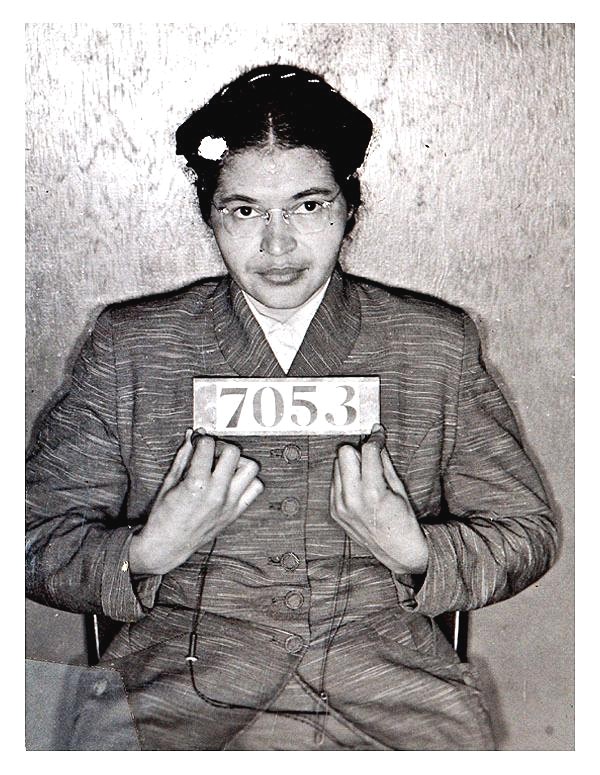
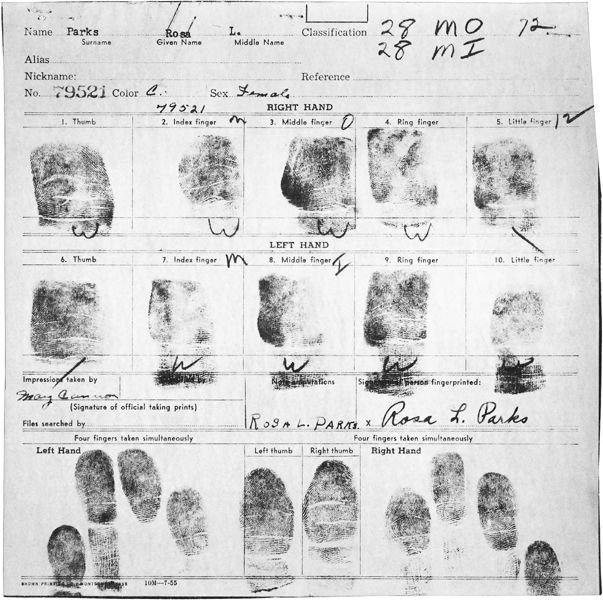
‘Tired of Giving In': The Arrest Report, Mug Shot and Fingerprints of Rosa Parks (December 1, 1955)

Rosa_Parks_Booking_Photo_


On this day in 1955, Rosa Parks took her fateful bus ride in Montgomery, Alabama.


As the story is often told, Parks was a diminutive African-American seamstress who was weary from a long day of work at a downtown department store. Her feet ached, so when the driver ordered her to give up her seat to a white man who had just gotten on the bus, Parks refused, accidently setting into motion a series of events that led to the modern Civil Rights Movement.


The problem with the story, told in that way, is that it is grossly misleading.


Besides being a seamstress, Parks was a political organizer and activist, a member of the Montgomery Voters League and secretary of the local chapter of the NAACP. And while it’s true that Parks didn’t know when she boarded the bus that day that she would commit an act of civil disobedience, when the moment arose she knew what she was doing, and why. As Parks later wrote in her autobiography:


People always say that I didn’t give up my seat because I was tired, but that isn’t true. I was not tired physically, or no more tired than I usually was at the end of a working day. I was not old, although some people have an image of me as being old then. I was forty-two. No, the only tired I was, was tired of giving in.


Rosa_Parks_Fingerprints_


Parks was not the first black person to be arrested in 1955 for refusing to give up a seat on Montgomery’s racially segregated buses. There was a growing sense in the African-American community that the time was ripe for change. The previous year, the U.S. Supreme Court had issued its landmark decision in Brown v. Board of Education, declaring that segregation in public schools was unconstitutional.


The Women’s Political Council in Montgomery was already laying the groundwork for a boycott of the city bus system when it learned of Parks’ arrest. Given the respect and support Parks had within the community, the group decided it was an opportune moment to take action. A one-day boycott was held on the day of Parks’s trial (she was convicted of violating Chapter 6, Section 11 of the Montgomery City Code and ordered to pay a $ 10 fine plus $ 4 in court costs) and a longer one was launched shortly afterward, crippling the finances of the company that ran the bus system, which typically derived over 75 percent of its fare revenue from African-American passengers. That boycott lasted more than a year, until late December of 1956, when the Supreme Court upheld a lower court ruling in Browder, et al v. Gayle that the segregation of Montgomery’s bus system was unconstitutional.


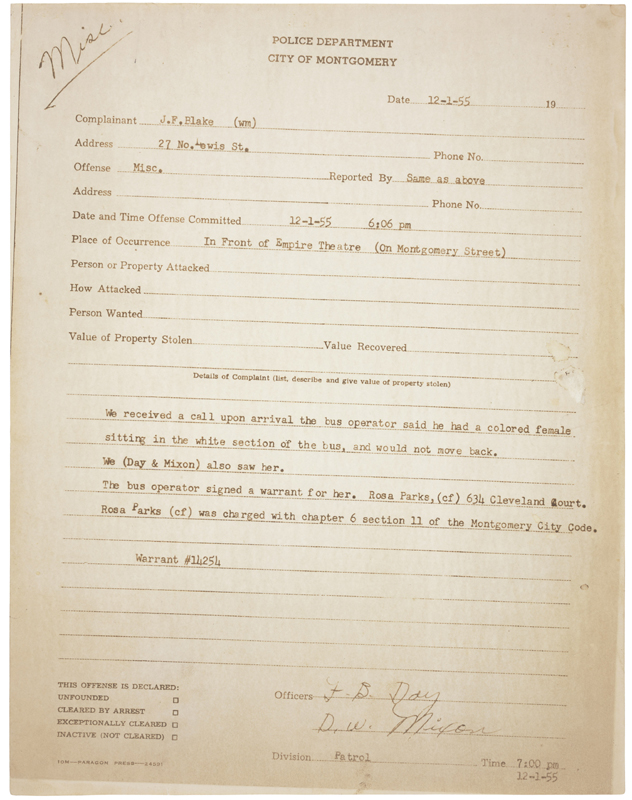
Rosa_Parks_Arrest_Report_


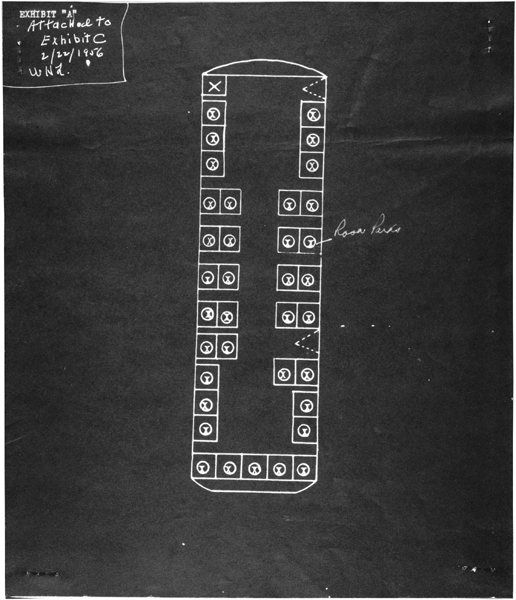
The documents shown here were submitted as evidence in Browder v. Gayle. The arrest report (above) states that Parks was sitting in the white section of the bus. Actually, she had complied with the law when she first entered, sitting down behind the first 10 seats which were permanently reserved for whites. (See the chart below; the front of the bus is at the top of the chart, with the driver’s seat designated by an “X.”) Under Montgomery law, the bus driver had the discretion to move blacks farther back when the white section filled up. Black people paid the same fare as whites, but were often ordered to exit the bus after paying the fare and re-enter through the back door. In standing-room-only conditions, they were not allowed even to stand next to white people.


Rosa_Parks_Bus_Chart_


At rush hour on Dec. 1, 1955, the bus was filling up as Parks and three other African-Americans sat in the first row behind the white section. When a white man entered the bus, the driver James F. Blake ordered Parks and the other three to leave their seats and move back, where they would all have to stand. After hesitating, the others got up but Parks stayed seated. In The Rebellious Life of Mrs. Rosa Parks, Jeanne Theoharis reconstructs the scene:


Blake wanted the seats. “I had police powers — any driver did.”  The bus was crowded and the tension heightened as Blake walked back to her. Refusing to assume a deferential position, Parks looked him straight in the eye.


Blake asked, “Are you going to stand up?”


Parks replied, “No.” She then told him she was not going to move  “because I got on first and paid the same fare, and I didn’t think it was right for me to stand so someone else who got on later could sit down.”


“Well, I’m going to have you arrested.”


“You may do that,” Parks replied.


via: National Archives


‘Tired of Giving In': The Arrest Report, Mug Shot and Fingerprints of Rosa Parks (December 1, 1955) is a post from: Open Culture. Follow us on Facebook, Twitter, and Google Plus, or get our Daily Email. And don’t miss our big collections of Free Online Courses, Free Online Movies, Free eBooks, Free Audio Books, Free Foreign Language Lessons, and MOOCs.


The post ‘Tired of Giving In': The Arrest Report, Mug Shot and Fingerprints of Rosa Parks (December 1, 1955) appeared first on Open Culture.


Open Culture


‘Tired of Giving In': The Arrest Report, Mug Shot and Fingerprints of Rosa Parks (December 1, 1955)

Watch Solaris (1972), Andrei Tarkovsky’s Haunting Vision of the Future


A friend recently told me about a screening of Andrei Tarkovsky’s Solaris he attended in a state of, er, expanded perception. The vivid sci-fi trip he’d expected turned into the most harrowing emotional experience of his life. 2001: A Space Odyssey has proven a reliable favorite of the consciousness-altering crowd since it came out in 1968, almost to the point where you’d think Kubrick made the film just for them. But Tarkovsky’s 1972 story of a sentient planet and the hallucinations with which it tempts and torments a nearby space station has an entirely different existential conception of mankind’s venture into the unknown realms of space and time. Whatever your own state of mind, you can watch Solaris free online (part one, part two). If you don’t feel sure about taking the plunge, have a look first at the updated trailer above. (You can also watch the original 1972 trailer in both Russian and English.)


Reworking Stanislaw Lem’s original novel toward his own artistic ends, Tarkovsky realized his vision of the future with a number of unusual techniques. Viewers often take special, bemused notice of the scene above, a five-minute drive down an urban highway which comes just before the protagonist, psychologist Kris Kelvin, departs for his space mission. (Tarkovsky liked to say he put it there to discourage impatient filmgoers.) The clip includes commentary from film scholars Vida Johnson and Graham Petrie. As Johnson explains, “Tarkovsky knew that in order to situate the story in a foreign place and a distant time, both to fulfill genre requirements and deflect potential censors, he needed to contrast his nostalgia for nature and the past with a city of the future.” And so, unable to build such a thing on his limited budget, Tarkovsky went to Tokyo: “The Japanese road signs, the foreign cars, long tunnels, and multi-lane highways with winding bridges and overpasses might have represented a city of the future for early-1970s Soviet audiences used to simple two-lane roads and domestic tin-box cars, if they were lucky enough to have a car at all.”


akasaka_08


Petrie references an entry from Tarkovsky’s diaries “where he worries that if the Japanese visa doesn’t come through in time, they will miss the end of the exhibition” — probably Osaka’s thoroughly future-oriented Expo ’70 World’s Fair. (Incidentally, next time you swing by Osaka, I do recommend taking a walk around the still-fascinating Expo ’70 grounds.) Tarkovsky did end up missing the Osaka exhibition, and so he shot in Tokyo instead. At Tarkovsky fan site nostalghia.com, Yuji Kikutake has gone through modern-day Tokyo and found the surviving landmarks of the Akasaka and Iikura neighborhoods over which the sequence passes — revealing the future, in other words, of the city of the future. Whatever you think of the resulting five minutes, the fact that Tarkovsky managed to go shoot them and that the officials in charge funded it demonstrates, as Petrie puts it, not just “the ingenuity of filmmakers trying to penetrate the Iron Curtain,” but “the high esteem in which [Tarkovsky] was held by the same film-industry bureaucrats who made his life miserable by cutting his budgets and trying to censor his films.”


In addition to Solaris (part one, part two) you can find other major films by the Russian auteur in our collection of Free Tarkovsky Films.


Related Content:


Tarkovsky Films Now Free Online


Tarkovsky’s Solaris Revisited


The Masterful Polaroid Pictures Taken by Filmmaker Andrei Tarkovsky


Tarkovsky’s Advice to Young Filmmakers: Sacrifice Yourself for Cinema


A Poet in Cinema: Andrei Tarkovsky Reveals the Director’s Deep Thoughts on Filmmaking and Life


A Photographic Tour of Haruki Murakami’s Tokyo, Where Dream, Memory, and Reality Meet


Colin Marshall hosts and produces Notebook on Cities and Culture and writes essays on cities, language, Asia, and men’s style. He’s at work on a book about Los Angeles, A Los Angeles Primer. Follow him on Twitter at @colinmarshall or on Facebook.


Watch Solaris (1972), Andrei Tarkovsky’s Haunting Vision of the Future is a post from: Open Culture. Follow us on Facebook, Twitter, and Google Plus, or get our Daily Email. And don’t miss our big collections of Free Online Courses, Free Online Movies, Free eBooks, Free Audio Books, Free Foreign Language Lessons, and MOOCs.


The post Watch Solaris (1972), Andrei Tarkovsky’s Haunting Vision of the Future appeared first on Open Culture.


Open Culture


Watch Solaris (1972), Andrei Tarkovsky’s Haunting Vision of the Future

George Harrison’s Mystical, Fisheye Self-Portraits Taken in India (1966)

Harrison Fisheye1


The Beatles’ sojourn in India can seem like a bit of a stunt, as much a rock n’ roll cliché as Led Zeppelin’s trashed hotel rooms or Fleetwood Mac’s coke binges. Easily parodied in, for example, Walk Hard: The Dewey Cox Story, the band’s turn Eastward looks in hindsight like faddish spiritual tourism. That impression may not be so far off. As one writer puts it:


By the late 1960s, The Beatles had engineered another pop culture revolution (at least in Europe and North America) by wearing Indian-style clothing, spouting religious and philosophical aphorisms that seemed to borrow from ‘Eastern’ thought, and later even visiting India for a highly-publicized training session to learn Transcendental Meditation with the fraudulent ‘mystic’ Maharishi Mahesh Yogi.


But while for John, Paul, and Ringo, “interest in Indian/Hindu culture was rather fleeting and temporal […] for George, India completely overhauled and changed his life permanently.” As Harrison himself would later recount of his first journey in 1966, “it was the first feeling I’d ever had of being liberated from being a Beatle or a number.” The rest of the band wouldn’t make the trip until two years later.


Harrison Fisheye 2


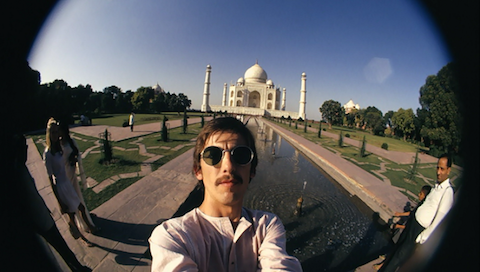
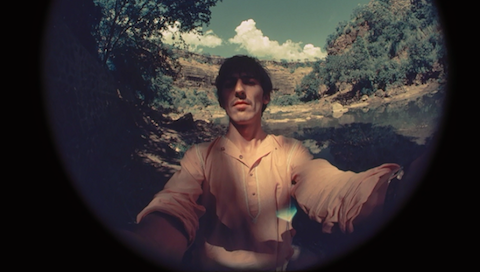
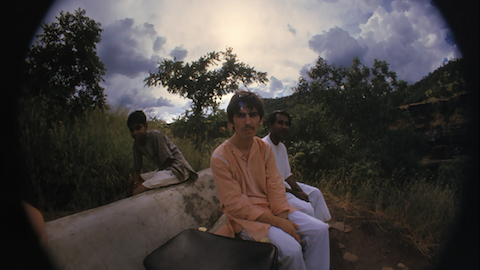
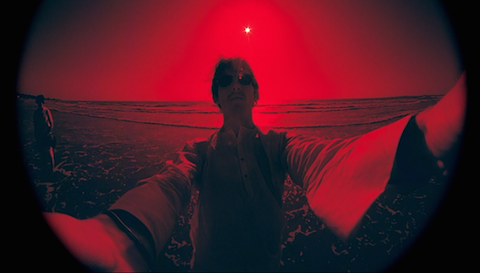
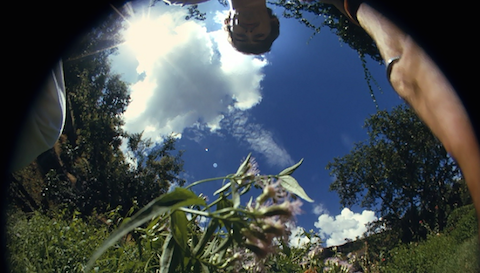
Harrison had principally embarked to study sitar under Ravi Shankar and learn yoga, but this was also a period of self-discovery and escape from, as he says, the “mania.” Traveling, as he always did, with a camera, he documented his journey. His pictures are far from ordinary tourist images. While he describes in writing the “mixture of unbelievable things” he saw, he just as often turned the camera on himself, his photographic introspection made even more pronounced by his use of a fisheye lens.


Harrison Fisheye 3


Interestingly, in his recollection of the trip, Harrison references the surreal cult, sci-fi show The Prisoner as a prime illustration of life as “a number.” One of the show’s most memorable devices involves a huge, mysterious white bubble that captures or kills anyone trying to escape the sinister organization that holds the main character captive. In Harrison’s photos, the bubble becomes a paradoxical representation of his way out of fame’s fishbowl, of the prison of Beatlemania and an identity that felt contrived and alienating.


Harrison Fisheye 4


Behind his steady, serious gaze open up vistas that presage the breadth and depth of his immersion in Indian spiritual practices. Whatever one thinks of his conversion, there’s no doubt it was sincere, and lifelong. Not long after this first trip, at the age of 24, he wrote to his mother, “I want to be self-realized. I want to find God. I’m not interested in material things, this world, fame.” Harrison expressed the very same mystical aspirations in his final, 1997 interview, still playing and singing with his mentor Ravi Shankar.


Harrison Fisheye 5


via Shooting Film/Dangerous Minds


Related Content:


Ravi Shankar Gives George Harrison a Sitar Lesson … and Other Vintage Footage


Watch George Harrison’s Final Interview and Performance (1997)


Phil Spector’s Gentle Production Notes to George Harrison During the Recording of All Things Must Pass


Josh Jones is a writer and musician based in Durham, NC. Follow him at @jdmagness.


George Harrison’s Mystical, Fisheye Self-Portraits Taken in India (1966) is a post from: Open Culture. Follow us on Facebook, Twitter, and Google Plus, or get our Daily Email. And don’t miss our big collections of Free Online Courses, Free Online Movies, Free eBooks, Free Audio Books, Free Foreign Language Lessons, and MOOCs.


The post George Harrison’s Mystical, Fisheye Self-Portraits Taken in India (1966) appeared first on Open Culture.


Open Culture


George Harrison’s Mystical, Fisheye Self-Portraits Taken in India (1966)

Wanderers: A Short Sci-Fi Film About Humanity’s Future in Space, Narrated by Carl Sagan


Swedish animator Erik Wernquist calls his short science fiction film, Wanderers, a speculative look at “humanity’s future expansion into the Solar System,” a “glimpse of the fantastic and beautiful nature that surrounds us on our neighboring worlds,” and “how it might appear to us if we were there.” The locations shown in Wanderers are all “digital recreations of actual places in the Solar System, built from real photos and map data.” And Wernquist has a big still-image gallery where he walks you through his creative work. The voice accompanying the film is none other than Carl Sagan’s, taken from an audio recording of his 1994 book Pale Blue Dot: A Vision of the Human Future in Space. Astute sci-fi fans will also notice the influences of Arthur C. Clarke, Kim Stanley Robinson and the master of space art Chesley Bonestell.


Related Content:


Free Science Fiction Classics on the Web: Huxley, Orwell, Asimov, Gaiman & Beyond


Carl Sagan Presents Six Lectures on Earth, Mars & Our Solar System … For Kids (1977)


Revisit Futuria Fantasia: The Science Fiction Fanzine Ray Bradbury Published as a Teenager


Arthur C. Clarke Narrates Film on Mandelbrot’s Fractals; David Gilmour Provides the Soundtrack


Wanderers: A Short Sci-Fi Film About Humanity’s Future in Space, Narrated by Carl Sagan is a post from: Open Culture. Follow us on Facebook, Twitter, and Google Plus, or get our Daily Email. And don’t miss our big collections of Free Online Courses, Free Online Movies, Free eBooks, Free Audio Books, Free Foreign Language Lessons, and MOOCs.


The post Wanderers: A Short Sci-Fi Film About Humanity’s Future in Space, Narrated by Carl Sagan appeared first on Open Culture.


Open Culture


Wanderers: A Short Sci-Fi Film About Humanity’s Future in Space, Narrated by Carl Sagan